How to Choose the Right Expansion Joint System
Updated: Oct 12
A Selection Guide for Parking Structures, Stadiums, Plaza Decks, Ramps, and Bridges

Two joint openings can be the exact same width and need completely different expansion joint systems. Why? Because movement, traffic loads, waterproofing needs, and code requirements are rarely the same from one project to the next.
A 2-inch opening on a parking garage ramp isn’t the same as a 2-inch opening on a covered stadium walkway. One needs to be fully waterproof and handle heavy vehicular traffic while the other needs to prioritize ADA requirements for pedestrians. Same width, but two completely different systems.
More often than not, leaks, joint damage, premature failure, and repairs can be traced back to a system that wasn’t designed for the project’s specific demands. Fortunately, those problems are usually preventable by asking a few key questions upfront.
Here are the six questions to ask before you spec or install your next expansion joint system.
1. What type of movement does it need to handle?

Expansion joints exist for one reason: to accommodate movement. But not all types of movement are the same, and not every joint system is designed to handle each type.
Depending on the structure and its environment, joints may need to accommodate thermal expansion and contraction, lateral shear (side-to-side movement), wind movement, or multidirectional seismic movement.
Every expansion joint system is designed with specific movement capabilities. While all systems accommodate some amount of thermal movement, not every system can handle large or multidirectional movement. Seismic applications, for example, often require joints that can move in multiple directions while maintaining structural integrity.
Selecting a system with insufficient movement capability places excessive stress on the joint, which increases the risk of premature wear, leaks, or system failure.
2. How wide is the joint opening?
Joint openings aren’t standardized. Depending on the structure, they can range anywhere from 1 inch to 24 inches. Even extremely wide openings of 48 inches are not uncommon.
Some expansion joint systems are designed for relatively narrow openings, while others are engineered for much larger movement zones. Start with your project’s service condition requirements before comparing products.
3. What type of traffic does it need to accommodate?
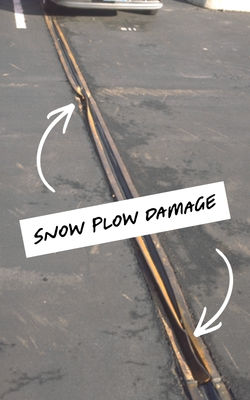
Traffic conditions have a big impact on expansion joint selection. Pedestrians walking across a joint put very different demands on a system than delivery trucks, snowplows, or forklifts running back and forth all day.
While nearly all horizontal expansion joint systems can accommodate pedestrian traffic, applications involving vehicle traffic, snowplows, forklifts, and other heavy loads require systems engineered for those specific conditions.
Heavy vehicular traffic requires a heavy-duty joint system with reinforced cover plates or gland systems rated for repeated wheel loads. Hospitals and medical facilities often need “no-bump” systems so that gurneys and sensitive equipment can roll across the joint without a jolt. Facilities running robotics or automated guided vehicles have similar requirements.
If you ignore this factor during the system selection process, you can see accelerated wear, damage, or cracked cover plates.
4. Does it need to be waterproof or just water-resistant?
Parking structures, plaza decks, open-air stadiums, and other exterior applications where the joint is situated above an occupied space usually require a fully waterproof system. That means the joint has to manage water at the surface and prevent it from flowing into the space below, whether that’s a lower parking level, retail space, or mechanical room. Other applications may only require systems that are water-resistant or shed occasional water.
Choosing a water-resistant system when the application calls for waterproof performance can lead to water infiltration and damage. Always consider what type of exposure your structure has and the consequences of potential water leakage.
5. Is the expansion joint in a path of travel?
Expansion joints installed in sidewalks, concourses, building entrances, and pedestrian walkways should provide a smooth transition that minimizes trip hazards. A joint that sticks out of the surrounding surface or has a gap wide enough to catch a heel can be a trip hazard (and a potential liability).
This is where ADA (Americans with Disabilities Act) accessibility requirements come into play. Joints in accessible paths of travel need to meet specific requirements around surface changes and gap widths. Systems designed for vehicular areas aren’t always designed with those same accessibility details in mind, so if the joint crosses a walkway, you'll want to factor that into your selection from the start.
6. Does it need a fire rating?
Not every expansion joint system is fire-rated. If you use a non-rated system in a rated assembly, it can create a gap in the building’s life safety system (both figuratively and literally).
This is one requirement that can be easily overlooked if you select a joint system based purely on movement capability and traffic load. Before finalizing your selection, check your project’s fire and life safety requirements and confirm the system you choose has been tested and rated for that application.
Need help choosing a system?
There’s no single expansion joint that works everywhere. Every project has different requirements that need to be considered.
If you have a project coming up, send us the details and we’ll help you choose the right expansion joint system for the job.
